How Zumy Is Helping Hubballi the Way Porter Helped Bengaluru Move Goods Faster
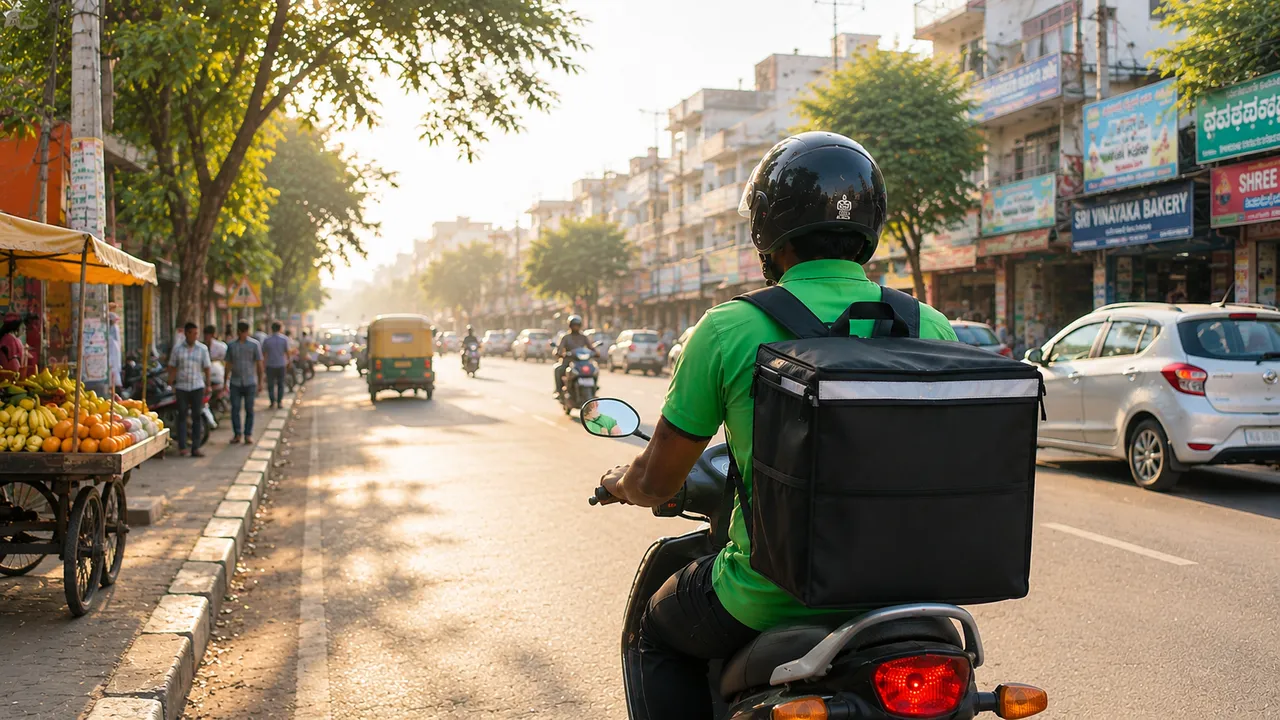
Zumy is building a local, two-wheeler-based delivery network for Hubballi, helping businesses and customers move small goods across the city without maintaining their own delivery fleet.
How Zumy Is Helping Hubballi the Way Porter Helped Bengaluru Move Goods Faster
Bengaluru’s business growth created a simple but important logistics problem: companies frequently needed to move goods across the city, but hiring a vehicle, negotiating with a driver, coordinating pickup, and confirming delivery required considerable effort. Porter addressed this problem by creating an app-based intracity logistics network that connected businesses and individuals with nearby commercial vehicle operators.
Hubballi now has a similar need at a different scale.
Local retailers, manufacturers, restaurants, printing businesses, wholesalers, pharmacies, automobile spare-parts shops, textile stores, home businesses, and individual customers regularly need to send small items across the city. However, many still depend on shop employees, personal contacts, auto drivers, or customers to manage these deliveries.
Zumy is building a local delivery network designed specifically around this gap. While Porter began by organising larger commercial vehicles and goods transportation in Bengaluru, Zumy is making two-wheeler-based, on-demand delivery more accessible for Hubballi’s everyday requirements.
What Porter Changed for Bengaluru Businesses
Porter was founded in Bengaluru in 2014 as an intracity goods transportation platform. Its model connected customers who needed to transport goods with independent vehicle operators using mini trucks, tempos, two-wheelers, and other commercial vehicles.
Instead of repeatedly calling drivers and negotiating each trip, customers could request transportation through a digital platform. This brought more structure to a fragmented market and gave businesses easier access to vehicles, clearer pricing, digital booking, and a more dependable way to coordinate local movement.
Porter did not create Bengaluru’s need for goods transportation. The need already existed. Its contribution was making that transportation easier to access and manage.
Zumy is approaching Hubballi with a similar principle: local delivery should be available when a business needs it, without requiring the business to maintain its own delivery team.
Why Hubballi Needs an Organised Local Delivery Network
Hubballi is not only a residential city. It is a major commercial centre for North Karnataka, with businesses operating across retail, textiles, food processing, electrical goods, automobile components, printing, manufacturing, agriculture, engineering, machine tools, and other sectors.
The wider Hubballi-Dharwad region contains industrial estates, small and medium enterprises, wholesale markets, educational institutions, restaurants, offices, healthcare facilities, and a large number of independent traders.
This commercial activity creates thousands of small transportation requirements.
A textile shop may need to send a set of garments to a customer. An electrical supplier may need to deliver a component to a technician. A printing company may need to send brochures to an office. A restaurant may need a food order delivered. An automobile spare-parts dealer may need to send a small component to a garage. A customer may need to collect documents, medicines, keys, gifts, or forgotten belongings from another location.
Each delivery may appear small, but collectively these movements form an important part of the city’s commercial infrastructure.
How Zumy Is Solving the Local Delivery Problem
Zumy allows customers and businesses to request a nearby delivery partner for an intracity pickup and drop. The user enters the pickup location, delivery address, parcel information, and payment preference. A delivery partner is assigned to collect the item and transport it across the city.
This reduces the need for businesses to:
- Recruit full-time delivery employees
- Purchase and maintain delivery vehicles
- Call multiple drivers to check availability
- Negotiate delivery charges for every trip
- Send shop employees away from their primary work
- Ask customers to arrange collection
- Coordinate delivery updates manually
Businesses can instead request delivery only when an order needs to be moved.
This is particularly useful for small businesses that receive several delivery requests during some days but may not have enough regular volume to justify employing a dedicated rider.
Built Around Smaller, Everyday Deliveries
Porter became known for transporting commercial goods using vehicles such as mini trucks and tempos, although it later expanded into two-wheelers, courier services, household shifting, and enterprise logistics.
Zumy’s immediate focus in Hubballi is different. Its network is built primarily around two-wheeler deliveries for smaller items that need to move quickly within the city.
Typical use cases include:
- Automobile spare parts
- Electrical and electronic components
- Garments and textile products
- Printed materials and stationery
- Medicines and healthcare items
- Documents and office materials
- Hardware products
- Food orders
- Gifts, cakes, and flowers
- Keys, chargers, and forgotten belongings
- Small packages from local sellers
These deliveries do not usually require a mini truck. They require a nearby rider, reasonable pricing, quick pickup, and dependable communication.
Supporting Hubballi’s Local Businesses
One of Zumy’s most important contributions is helping local businesses offer delivery without building their own logistics operation.
Consider a small automobile spare-parts shop. The shop may receive calls from garages requesting urgent parts. Without an external delivery network, an employee may have to leave the shop, locate an auto driver, or ask the mechanic to collect the item. This delays the repair and interrupts the shop’s work.
With Zumy, the shop can request a rider, keep its employees at the counter, and send the part directly to the garage.
The same model can help a printing business deliver completed materials to corporate offices, a textile seller serve customers who cannot visit the store, or a home-based baker send cakes without employing a permanent rider.
Local delivery therefore becomes more than transportation. It becomes a service capability that smaller businesses can offer to their customers.
Making Local Commerce More Convenient for Customers
Customers increasingly expect businesses to bring products to them. However, many independent Hubballi businesses cannot provide the delivery experience offered by large ecommerce platforms.
Zumy helps reduce this gap.
A local customer can purchase from a neighbourhood business and request delivery instead of travelling across the city. This makes local purchasing more convenient and allows independent businesses to compete on service rather than depending only on location.
The result can be beneficial for both sides. Customers gain access to faster local fulfilment, while businesses can serve buyers beyond their immediate neighbourhood.
Helping Businesses Avoid Fixed Delivery Costs
Operating an internal delivery fleet requires a business to pay salaries, vehicle expenses, fuel costs, maintenance, insurance, and administrative costs regardless of how many deliveries are completed.
An on-demand model converts much of this fixed cost into a per-delivery expense.
A business that needs two deliveries today and fifteen tomorrow can request services according to actual demand. It does not need to keep multiple riders employed throughout the month solely to handle occasional order peaks.
This approach can be especially valuable for small retailers, manufacturers, wholesalers, restaurants, and service providers whose delivery volumes change from one day to another.
Creating Flexible Earning Opportunities for Local Riders
A local delivery network also creates work opportunities for people who own motorcycles or scooters and want to earn through delivery assignments.
As of July 11, 2026, Zumy’s platform had 212 delivery-partner records and had completed 13,815 orders from more than 2,300 unique customers. These figures indicate growing local adoption of app-based intracity delivery in Hubballi.
The model allows delivery partners to use their familiarity with local roads, commercial areas, landmarks, and neighbourhoods. This local knowledge is particularly useful in places where addresses may depend on landmarks, shop names, junctions, or commonly recognised areas.
As order density grows, riders may also receive more opportunities within shorter distances, reducing idle travel between assignments.
Building a City-Level Delivery Network
The larger idea behind Zumy is not limited to delivering individual parcels. It is to create a shared delivery network that can be used by many types of local businesses.
A single rider network can support:
- Parcel delivery
- Restaurant delivery
- Business-to-customer orders
- Business-to-business movement
- Store pickups
- Document collection
- Scheduled local deliveries
- Urgent two-wheeler transportation
This shared network can be more practical than every shop operating a separate delivery system.
Porter demonstrated the value of aggregating fragmented transport demand within a large city. Zumy is applying a related principle to smaller, two-wheeler-friendly delivery requirements in Hubballi.
Why the Porter Comparison Matters
The comparison between Zumy and Porter is not about claiming that both companies are identical.
Porter began in Bengaluru, operates across numerous cities, and supports a broad range of vehicles and logistics categories. Zumy is an emerging local platform focused on Hubballi and built around smaller intracity deliveries.
The similarity lies in the problem being addressed.
Porter helped Bengaluru businesses move away from repeatedly searching for vehicles and coordinating drivers manually. Zumy is helping Hubballi businesses move away from relying on employees, personal contacts, and informal delivery arrangements for everyday local orders.
Both models recognise that urban commerce depends on reliable movement between two nearby points.
Designed for the Reality of a Tier-2 City
A service built for Hubballi cannot simply copy a Bengaluru logistics model.
Tier-2 city delivery must account for:
- Lower average order values
- High customer sensitivity to delivery charges
- Shorter delivery distances
- Mixed digital and cash payment preferences
- Landmark-based addresses
- Strong relationships between local shops and customers
- Uneven order density across neighbourhoods
- The importance of Kannada and regional communication
- Variable demand during lunch, evening, weekends, and festivals
Zumy’s long-term success will depend on how effectively it responds to these local conditions.
Affordable delivery is important, but pricing must also support fair rider earnings and sustainable platform operations. Fast service is valuable, but customers and businesses also need dependable pickup, communication, tracking, and issue resolution.
Building this balance is one of the central challenges of creating a city-level delivery network.
What Zumy Could Mean for Hubballi’s Future
As local commerce grows, the movement of small goods will become more important.
Businesses will need practical ways to fulfil WhatsApp orders, phone orders, online purchases, replacement requests, service calls, and urgent business deliveries. Customers will increasingly expect local stores to provide the same convenience they receive from national apps.
Zumy can help provide the delivery layer behind these transactions.
A hardware store should be able to send a missing part to a worksite. A restaurant should be able to reach customers outside its immediate area. A manufacturer should be able to send samples to a buyer. A customer should be able to collect an item from a local shop without travelling across the city.
When these movements become easier, local businesses can serve more customers and complete transactions faster.
Conclusion
Porter helped organise intracity goods transportation in Bengaluru by connecting demand with available commercial vehicles through technology.
Zumy is working on a similar city-level problem in Hubballi, but with a model designed around smaller packages, two-wheelers, local businesses, affordable delivery, and shorter distances.
It is helping businesses provide delivery without owning vehicles or employing dedicated riders. It is helping customers purchase from local shops more conveniently. It is creating earning opportunities for local delivery partners. Most importantly, it is building a shared logistics network for a city where thousands of small items need to move every day.
Zumy may still be at an early stage, but its role is becoming clear: to make sending anything across Hubballi as simple as booking a local delivery.
Need to send something within Hubballi? Download Zumy and request a local pickup and delivery in a few simple steps.